Buy microliving.eu ?
We are moving the project
microliving.eu .
Are you interested in purchasing the domain
microliving.eu ?
domain@kv-gmbh.de · 0541-91531010
Buy microliving.eu ?
What releases carbon dioxide?
Carbon dioxide is released through various natural and human activities. Natural sources include respiration of living organisms, volcanic eruptions, and decomposition of organic matter. Human activities such as burning fossil fuels, deforestation, and industrial processes also release significant amounts of carbon dioxide into the atmosphere. Additionally, activities like transportation, agriculture, and waste management contribute to the release of carbon dioxide. **
What is carbon dioxide?
Carbon dioxide is a colorless, odorless gas that is naturally present in the Earth's atmosphere. It is composed of one carbon atom and two oxygen atoms, and is produced through natural processes such as respiration and volcanic eruptions, as well as through human activities such as burning fossil fuels and deforestation. Carbon dioxide is a greenhouse gas, meaning it contributes to the greenhouse effect and global warming by trapping heat in the Earth's atmosphere. It plays a crucial role in the Earth's carbon cycle and is essential for plant photosynthesis. **
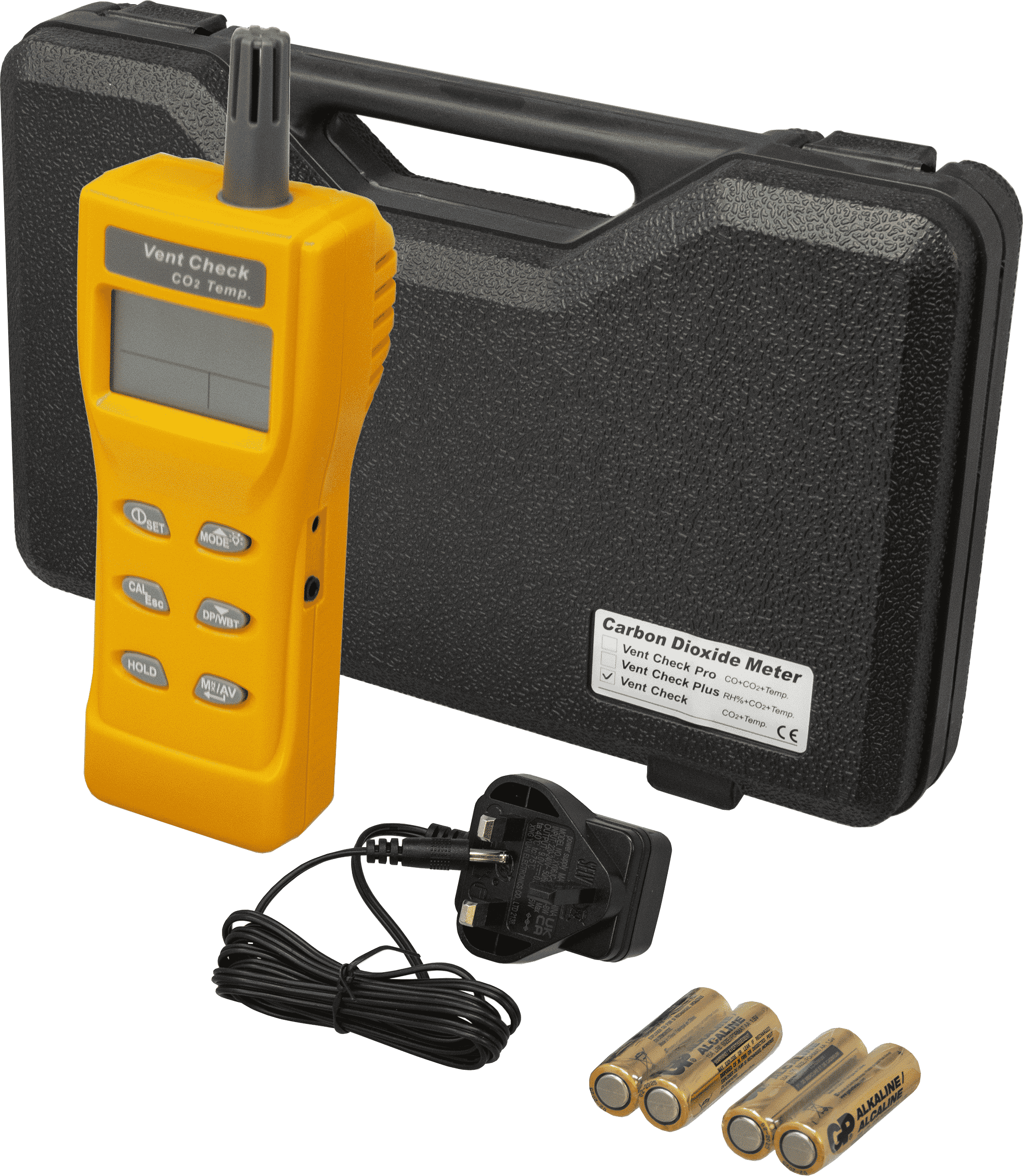

Similar search terms for Carbon dioxide
Top-Angebote
Products related to Carbon dioxide:
-
S&S Northern Merlin CO2-X Air Quality Monitor - Carbon DioxideThe Merlin CO2-X Monitor is designed to provide accurate and clear readings of CO2 levels in any room, featuring a TFT display and a traffic light color system to indicate air quality status. This monitor ensures safety by alerting users when CO2 levels become dangerous and can operate independently or in conjunction with Merlin gas safety systems. Precise CO2 Monitoring: Displays CO2 levels in parts per million (ppm) for accurate air quality assessment. TFT Display: Provides a clear and precise reading of CO2 levels with a user-friendly interface. Traffic Light Indicator: Uses color coding to indicate safe, adequate, or dangerous air quality levels. Alarm System: Sounds an audible alarm when CO2 levels rise to dangerous levels, alerting use257,40 £*Shipping: 0,00 £Secure redirect to the provider
-
Useful Little Things DIY Aquarium CO2 System Bottle Caps Kit Carbon Dioxide Generator Reactor Connector 10pcsBoost aquatic plant growth and maintain a thriving underwater ecosystem with our DIY aquarium CO2 system bottle caps kit carbon dioxide generator reactor connector. Engineered to screw securely onto standard carbonated beverage bottles, these...49,97 $*Shipping: 0,00 $Secure redirect to the provider
-
Modern Minimalist Tilt-Out Shoe Cabinet with Heavy Duty Frame and Space-Saving Design(1)Heavy-Duty Steel Frame ConstructionEngineered with premium cold-rolled steel metal framework, this shoestorage cabinet delivers exceptional stability and superior weightcapacity.167,49 $*Shipping: 0,00 $Secure redirect to the provider


-
How many carbon dioxide molecules are contained in 25g of carbon dioxide?
To calculate the number of carbon dioxide molecules in 25g of carbon dioxide, we can use the formula n = m/M, where n is the number of moles, m is the mass, and M is the molar mass. The molar mass of carbon dioxide is 44.01 g/mol. So, n = 25g / 44.01 g/mol = 0.568 moles. Since 1 mole of any substance contains 6.022 x 10^23 molecules (Avogadro's number), we can calculate the number of carbon dioxide molecules in 25g as 0.568 moles x 6.022 x 10^23 molecules/mole = 3.42 x 10^23 molecules. Therefore, there are approximately 3.42 x 10^23 carbon dioxide molecules in 25g of carbon dioxide. **
-
What is a carbon dioxide source and what is a carbon dioxide sink?
A carbon dioxide source is any process or activity that releases carbon dioxide into the atmosphere, such as burning fossil fuels or deforestation. On the other hand, a carbon dioxide sink is a natural or artificial reservoir that absorbs more carbon dioxide than it releases, helping to reduce the amount of carbon dioxide in the atmosphere. Examples of carbon dioxide sinks include forests, oceans, and certain technologies like carbon capture and storage. **
-
Is carbon dioxide a dipole?
No, carbon dioxide is not a dipole because it has a linear molecular geometry with two oxygen atoms on either side of the carbon atom. This arrangement results in the molecule having a symmetrical distribution of charge, with the oxygen atoms pulling the electron density equally in opposite directions, canceling out any overall dipole moment. As a result, carbon dioxide is considered a nonpolar molecule. **
-
How is carbon dioxide produced?
Carbon dioxide is produced through various natural processes such as respiration in animals and plants, volcanic eruptions, and decomposition of organic matter. Additionally, human activities such as burning fossil fuels, deforestation, and industrial processes also contribute to the production of carbon dioxide. These activities release carbon that has been stored in the Earth's crust for millions of years, adding to the overall concentration of carbon dioxide in the atmosphere. **


Why is carbon dioxide polar?
Carbon dioxide is a linear molecule with two oxygen atoms on either side of a central carbon atom. The oxygen atoms are more electronegative than carbon, causing them to pull the shared electrons towards themselves, creating a partial negative charge on the oxygen atoms and a partial positive charge on the carbon atom. This unequal distribution of charge results in a polar molecule, with a net dipole moment. **
When does carbon dioxide condense?
Carbon dioxide condenses into a solid at temperatures below -78.5 degrees Celsius (-109.3 degrees Fahrenheit) and at atmospheric pressure. This solid form of carbon dioxide is commonly known as dry ice. At temperatures above -78.5 degrees Celsius, carbon dioxide remains in its gaseous state. **
Top-Angebote
Products related to Carbon dioxide:
-
Anton IAQ8494 Carbon Dioxide Meter - CO2Accurate and Reliable CO2 Monitoring for Indoor Air Quality The Anton CO2 Indoor Air Quality Meter IAQ8494 is a handheld instrument designed for monitoring environmental carbon dioxide (CO2) levels. Compliant with BS8494 standards, it measures CO2 and ambient temperatures, ensuring optimal indoor air quality. This meter is essential for detecting inadequate ventilation and faulty appliances that increase CO2 levels, leading to drowsiness and condensation. Key Features High CO2 Measurement Range: Measures ambient carbon dioxide up to 9,999 ppm. Stable NDIR Sensor: Utilizes a non-dispersive infrared (NDIR) sensor with an anticipated 15-year lifespan. Minimum/Maximum Levels: Records a286,68 £*Shipping: 0,00 £Secure redirect to the provider
-
S&S Northern Merlin RSVCO21 Carbon Dioxide Detector - Up to 4500ppmMerlin RSVCO21 Carbon Dioxide Detector – Up to 4500ppm CO₂, Temperature & Humidity Sensor The Merlin RSVCO21 Carbon Dioxide Detector is a high accuracy CO₂, temperature and humidity room sensor for air quality monitoring in residential, commercial, public and light industrial environments. Made in the UK, this multi-function detector has analog, digital and relay outputs for integration with building management systems (BMS) via Modbus RTU or BACnet MS/TP protocols. With its non-dispersive infrared (NDIR) CO₂ sensing technology, self-calibrating function and excellent long term stability the RSVCO21 gives consistent performance and accuracy. It’s perfect for indoor environments such as classrooms, off167,30 £*Shipping: 0,00 £Secure redirect to the provider
-
S&S Northern Merlin CO2-X Air Quality Monitor - Carbon DioxideThe Merlin CO2-X Monitor is designed to provide accurate and clear readings of CO2 levels in any room, featuring a TFT display and a traffic light color system to indicate air quality status. This monitor ensures safety by alerting users when CO2 levels become dangerous and can operate independently or in conjunction with Merlin gas safety systems. Precise CO2 Monitoring: Displays CO2 levels in parts per million (ppm) for accurate air quality assessment. TFT Display: Provides a clear and precise reading of CO2 levels with a user-friendly interface. Traffic Light Indicator: Uses color coding to indicate safe, adequate, or dangerous air quality levels. Alarm System: Sounds an audible alarm when CO2 levels rise to dangerous levels, alerting use257,40 £*Shipping: 0,00 £Secure redirect to the provider
-
Useful Little Things DIY Aquarium CO2 System Bottle Caps Kit Carbon Dioxide Generator Reactor Connector 10pcsBoost aquatic plant growth and maintain a thriving underwater ecosystem with our DIY aquarium CO2 system bottle caps kit carbon dioxide generator reactor connector. Engineered to screw securely onto standard carbonated beverage bottles, these...49,97 $*Shipping: 0,00 $Secure redirect to the provider
-
What releases carbon dioxide?
Carbon dioxide is released through various natural and human activities. Natural sources include respiration of living organisms, volcanic eruptions, and decomposition of organic matter. Human activities such as burning fossil fuels, deforestation, and industrial processes also release significant amounts of carbon dioxide into the atmosphere. Additionally, activities like transportation, agriculture, and waste management contribute to the release of carbon dioxide. **
-
What is carbon dioxide?
Carbon dioxide is a colorless, odorless gas that is naturally present in the Earth's atmosphere. It is composed of one carbon atom and two oxygen atoms, and is produced through natural processes such as respiration and volcanic eruptions, as well as through human activities such as burning fossil fuels and deforestation. Carbon dioxide is a greenhouse gas, meaning it contributes to the greenhouse effect and global warming by trapping heat in the Earth's atmosphere. It plays a crucial role in the Earth's carbon cycle and is essential for plant photosynthesis. **
-
How many carbon dioxide molecules are contained in 25g of carbon dioxide?
To calculate the number of carbon dioxide molecules in 25g of carbon dioxide, we can use the formula n = m/M, where n is the number of moles, m is the mass, and M is the molar mass. The molar mass of carbon dioxide is 44.01 g/mol. So, n = 25g / 44.01 g/mol = 0.568 moles. Since 1 mole of any substance contains 6.022 x 10^23 molecules (Avogadro's number), we can calculate the number of carbon dioxide molecules in 25g as 0.568 moles x 6.022 x 10^23 molecules/mole = 3.42 x 10^23 molecules. Therefore, there are approximately 3.42 x 10^23 carbon dioxide molecules in 25g of carbon dioxide. **
-
What is a carbon dioxide source and what is a carbon dioxide sink?
A carbon dioxide source is any process or activity that releases carbon dioxide into the atmosphere, such as burning fossil fuels or deforestation. On the other hand, a carbon dioxide sink is a natural or artificial reservoir that absorbs more carbon dioxide than it releases, helping to reduce the amount of carbon dioxide in the atmosphere. Examples of carbon dioxide sinks include forests, oceans, and certain technologies like carbon capture and storage. **
Similar search terms for Carbon dioxide
-
Modern Minimalist Tilt-Out Shoe Cabinet with Heavy Duty Frame and Space-Saving Design(1)Heavy-Duty Steel Frame ConstructionEngineered with premium cold-rolled steel metal framework, this shoestorage cabinet delivers exceptional stability and superior weightcapacity.167,49 $*Shipping: 0,00 $Secure redirect to the provider
-
Multicon Wholesale Hub Compact Carbon Steel Manual Rod Bender Portable Mini Bending Machine Compact Carbon Steel Manual Rod Bender Portable Mini Bending MachineTurn tough bending tasks into effortless work with this rugged carbon steel mini bending machine designed for pros and DIYers alike. Whether youre shaping steel rods for frames, railings, or creative metal projects, this tool delivers consistent...149,97 $*Shipping: 0,00 $Secure redirect to the provider
-
Uplifted Goods Compact Pocket Utility Knife With Safety Lock And Carbon Steel Blade Compact Pocket Utility Knife With Safety Lock And Carbon Steel BladeUpgrade your everyday carry with this precision pocket utility knife featuring a 0.79inch carbon steel blade and a secure safety lock for safe, reliable opening and cutting. Built for handcrafts, paper work, and general utility use, this streamlined...34,97 $*Shipping: 0,00 $Secure redirect to the provider
-
Is carbon dioxide a dipole?
No, carbon dioxide is not a dipole because it has a linear molecular geometry with two oxygen atoms on either side of the carbon atom. This arrangement results in the molecule having a symmetrical distribution of charge, with the oxygen atoms pulling the electron density equally in opposite directions, canceling out any overall dipole moment. As a result, carbon dioxide is considered a nonpolar molecule. **
-
How is carbon dioxide produced?
Carbon dioxide is produced through various natural processes such as respiration in animals and plants, volcanic eruptions, and decomposition of organic matter. Additionally, human activities such as burning fossil fuels, deforestation, and industrial processes also contribute to the production of carbon dioxide. These activities release carbon that has been stored in the Earth's crust for millions of years, adding to the overall concentration of carbon dioxide in the atmosphere. **
-
Why is carbon dioxide polar?
Carbon dioxide is a linear molecule with two oxygen atoms on either side of a central carbon atom. The oxygen atoms are more electronegative than carbon, causing them to pull the shared electrons towards themselves, creating a partial negative charge on the oxygen atoms and a partial positive charge on the carbon atom. This unequal distribution of charge results in a polar molecule, with a net dipole moment. **
-
When does carbon dioxide condense?
Carbon dioxide condenses into a solid at temperatures below -78.5 degrees Celsius (-109.3 degrees Fahrenheit) and at atmospheric pressure. This solid form of carbon dioxide is commonly known as dry ice. At temperatures above -78.5 degrees Celsius, carbon dioxide remains in its gaseous state. **
* All prices are inclusive of VAT and, if applicable, plus shipping costs. The offer information is based on the details provided by the respective shop and is updated through automated processes. Real-time updates do not occur, so deviations can occur in individual cases. ** Note: Parts of this content were created by AI.